
Why So Many Kids Are Scared of the Dentist (And Why That's Okay)
If your child cries, freezes up, or flat-out refuses to get in the car on the way to a dental appointment, you're not alone, and you haven't done anything wrong. Dental anxiety is one of the most common fears in childhood. It shows up in kids of all ages, in all kinds of families, regardless of how many times they've been to the dentist before. The fear is real, it has real roots, and it deserves to be taken seriously rather than brushed aside.
Our team at Just For Kids Dental works specifically with children because we understand that a kid who is scared needs something different from a standard dental visit. We built our approach around helping children feel safe before anything else happens.
This page walks through what parents in Waxahachie and the surrounding Ellis County area want to know about childhood dental anxiety: what causes it, how to recognize it, what actually helps at home and in our office, and how to find a dental team that knows how to meet your child where they are.
Quick Takeaways for Parents
- Schedule morning appointments when your child's energy is fresh and less likely to build up anxiety throughout the day
- Ask about the office's approach to anxious kids before booking. Look for practices that use "tell-show-do" and move at your child's pace
- Start preparation 2-3 days before the visit with simple role-play at home, but avoid over-discussing it all week
- Know your options for comfort tools like nitrous oxide or other sedation if your child needs extra support
What's Actually Going On in Your Child's Brain
Dental anxiety in kids isn't a behavior problem, and it's not a parenting failure. It's a completely normal response rooted in how children's brains process new, unfamiliar, and physically close experiences. Understanding what's happening can make it a lot easier to help your child through it.
A big piece of it comes down to the unknown. Young children especially don't have a mental framework for what a dental visit involves, which means their brain fills in the blanks with worst-case scenarios. Add in the sensory environment (the sounds of equipment, the smell of the air, the bright overhead light, a stranger's hands working inside their mouth) and you have a genuinely overwhelming combination for a child who is still learning how to regulate big feelings.
There's also the issue of control. Children have very little of it in a dental chair. They're lying back, they can't see what's happening, and they can't easily communicate if something feels wrong. That loss of control can trigger anxiety even in kids who seem confident in other settings. This is why we spend so much time explaining each step before it happens and giving kids small choices along the way.
Some children are also temperamentally more sensitive than others. They feel things more intensely, notice more, and need more time to warm up to new experiences. If your child is wired that way, a dental visit can feel like a lot even when everything goes smoothly. That's not a sign that something went wrong. It's just who they are, and we work with that rather than against it.
What surprises many Waxahachie parents is how easily fear transfers. A child who overhears a parent say "I was scared too" before a visit, or who watches an older sibling get anxious in the waiting room, can absorb that anxiety without ever having a difficult experience themselves. Fear is learned, and kids are remarkably good at learning it from the people they trust most.
Understanding these psychological factors helps us tailor our approach to each child's needs. If you want to go deeper on what to expect, our first visit page walks through the specifics, and you can learn more about our team's approach to working with anxious children.
How Dental Fear Looks Different at Every Age
Understanding the psychology behind dental anxiety is one thing. Knowing what it actually looks like when your specific child is scared and what tends to help at their age is where things get practical. Dental fear doesn't show up the same way in a 3-year-old as it does in a 10-year-old, and what works for one stage can completely miss the mark at another.
Toddlers and Preschoolers (Ages 2 - 4)
If you're searching for how to prepare your 3-year-old for their first dentist visit, most of what they feel is separation anxiety and fear of the unfamiliar, not fear of dental work itself. They don't have the context to be scared of drills or needles yet. What they do know is that this is a strange room, with a strange person, and mom or dad might not be right next to them.
Crying, clinging, and refusing to open their mouth are all completely normal. We see this every day with Waxahachie families, and we've learned that short appointments, a calm pace, and letting them stay close to you during the visit can make a significant difference. We keep the first visit simple, just getting comfortable in the chair and maybe counting teeth.
Early Elementary (Ages 5 - 8)
Kids in this window have more imagination, which is both wonderful and the reason dental anxiety often peaks here. They've heard things from older kids, they can picture something going wrong, and they're old enough to feel embarrassed about being scared. Common signs include:
- Asking lots of "what if" questions in the days before the appointment
- Stomachaches or headaches the morning of the visit
- Crying or freezing up in the chair even for a routine cleaning
- Begging to reschedule
Giving kids this age some sense of control helps enormously. We let them ask questions, explain each step before it happens, and use simple reassuring language rather than minimizing their feelings. "It might feel a little weird, but you can handle it" tends to land better than "it won't hurt at all." We pace appointments so kids never feel rushed or overwhelmed, and we find that routine cleanings become much easier when kids know what to expect.
Older Kids and Tweens (Ages 9 - 12)
By this stage, fear often looks less like crying and more like avoidance, catastrophizing, or a kind of quiet dread. A 10-year-old who insists their tooth "doesn't really hurt that much" might be doing mental math about what treatment could involve. Tweens are also more aware of how they look to others, so they may mask anxiety or feel embarrassed to admit they're nervous.
Straightforward, honest conversation works best here. Tell them what's actually going to happen, skip the sugarcoating, and acknowledge that it's okay to feel nervous. We find that kids this age appreciate being treated more like partners in their care rather than patients who need to be managed. Our adolescent dentistry approach covers more about supporting kids through this stage.
Every child moves through these stages a little differently, and some kids carry anxiety from one phase into the next. The goal isn't to eliminate nerves entirely. It's to make sure fear doesn't become the reason they stop coming in.
What You Can Do at Home Before the Appointment
You have more influence over how your child experiences their dental visit than you might realize. The days and hours leading up to the appointment set the emotional tone, and a little intentional preparation can make a genuine difference in how your child walks through our doors.
Choose Your Words Carefully
Language matters more than most parents expect. Phrases like "it won't hurt" or "don't be scared" actually plant the very ideas you're trying to avoid. Your child hears "hurt" and "scared" before they hear the reassurance. Instead, keep your framing simple and positive: "The dentist is going to count your teeth and help keep them strong." Curious and matter-of-fact beats cheerful and over-reassuring every time. Our first visit guide walks through exactly what to expect when you bring your child to our Waxahachie office.
Practice at Home
For younger children especially, play is one of the best preparation tools available. Try a simple role-play at home where you take turns being the dentist and the patient. Use a toothbrush to "count teeth," recline on the couch, and make it lighthearted. You can even mention that they'll see a special chair that goes up and down. When the real experience echoes something familiar, the unfamiliar parts feel much less threatening.
Age-appropriate books and videos about dental visits can reinforce the same idea. You're not trying to eliminate all uncertainty, just reduce it enough that curiosity has room to show up alongside any nerves. If your child has questions about what happens during a dental cleaning, simple explanations help them feel more prepared.
Timing and Logistics
A few practical adjustments can shift the whole experience:
- Schedule morning appointments when possible. Kids often do best before fatigue and hunger set in
- Keep the morning routine calm and predictable so your child arrives settled, not rushed
- Avoid building up the appointment all week, which can give anxiety more time to grow
- Plan something low-key afterward so there's something to look forward to
Don't underestimate your own body language in the waiting area. Children are perceptive. If you're tense, scrolling anxiously, or watching your child's face for signs of distress, they notice. A relaxed posture, a normal conversational tone, and genuine calm on your part communicates that this is a routine, safe thing to do. You've already done the preparation. Trust it.
What We Do Differently for Anxious Kids at Just For Kids Dental
Other parents in Waxahachie will tell you the right dental office changes everything. We built our practice around one simple idea: kids aren't small adults, and they shouldn't be treated like one.
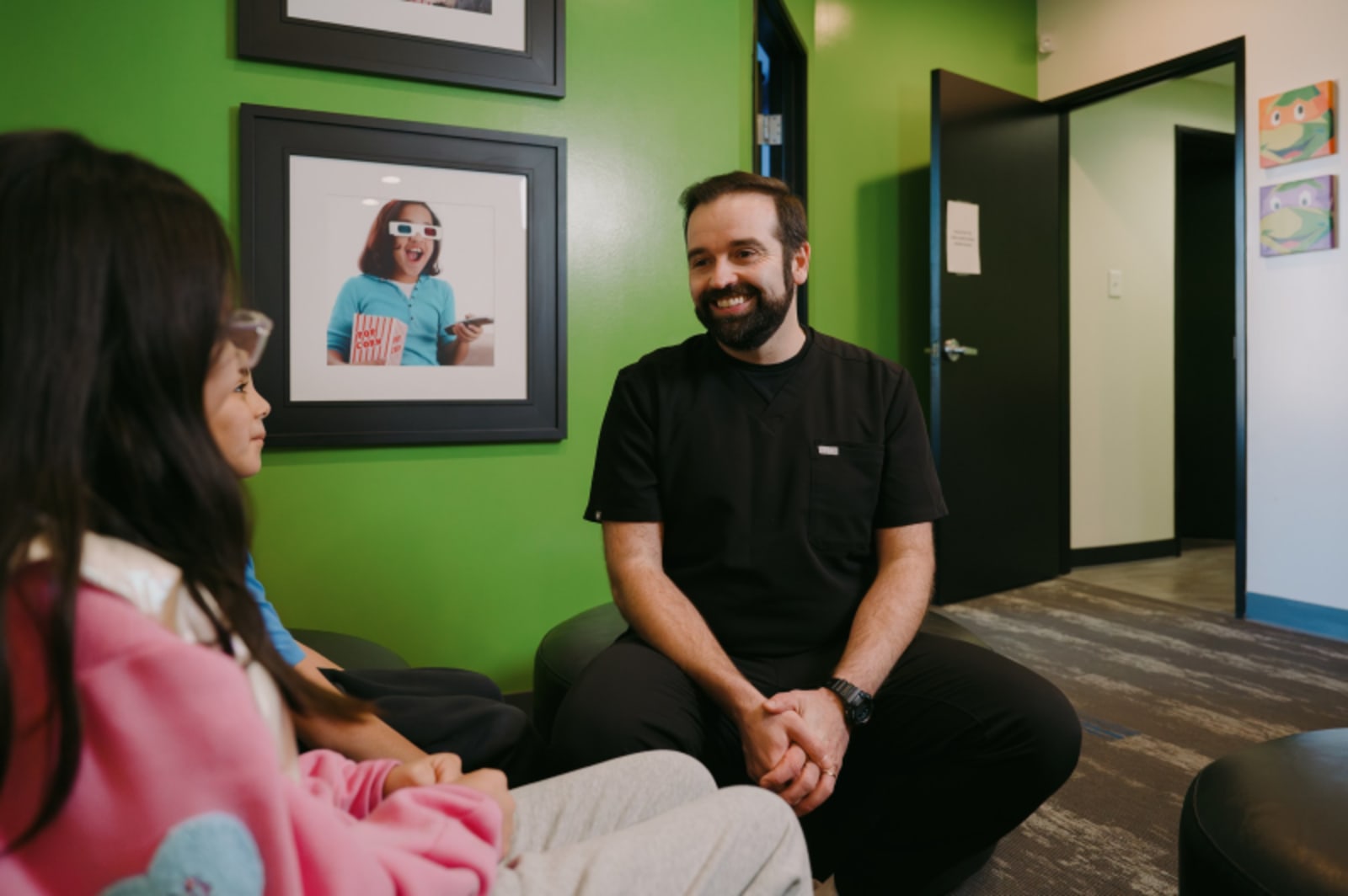
From the moment you walk into our office, that philosophy is obvious. We designed the space to feel like a place kids actually want to be. When a child doesn't feel like they've walked into a sterile medical environment, their nervous system gets a chance to settle before anyone even says hello.
Our Tell-Show-Do Approach
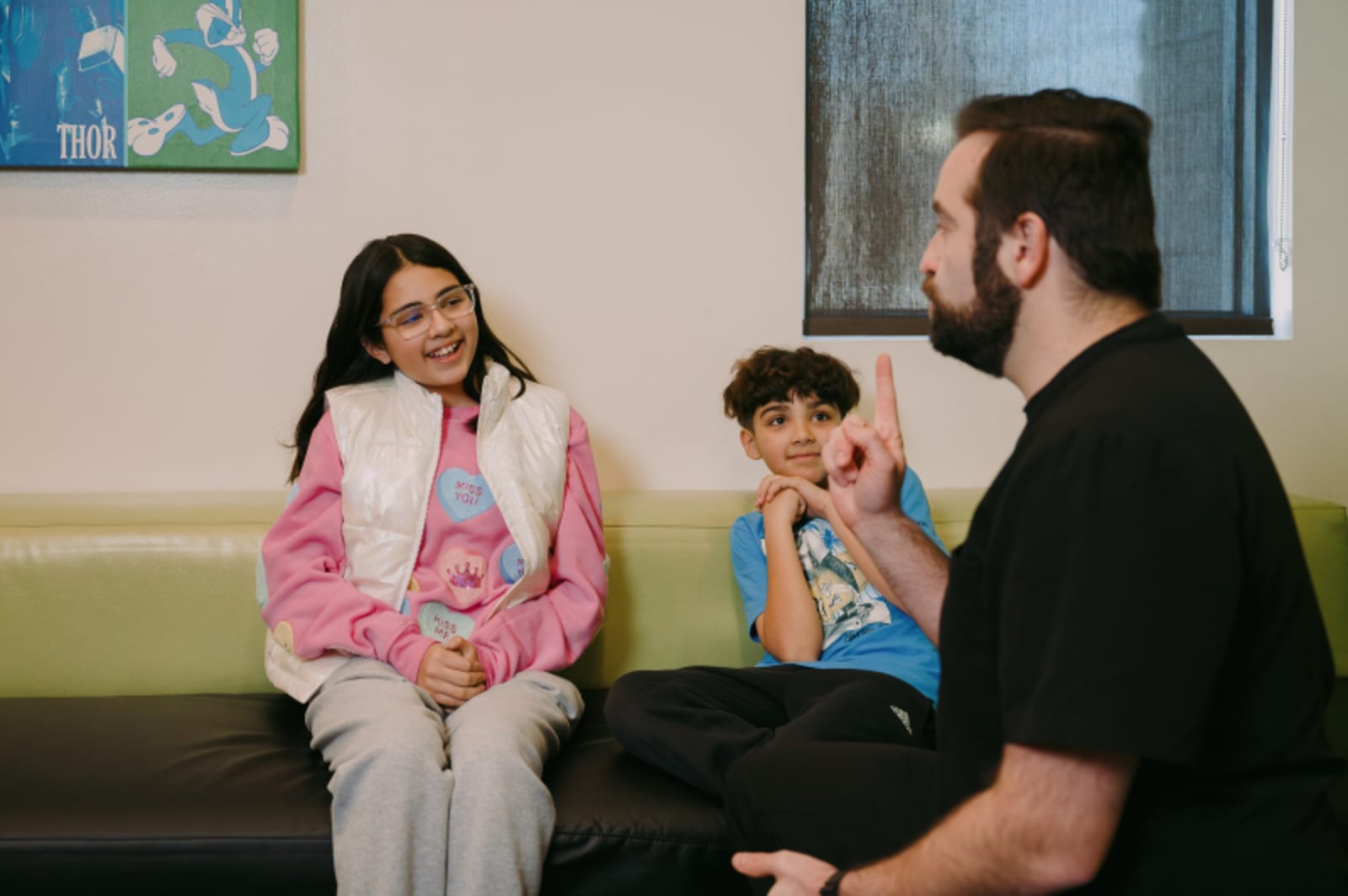
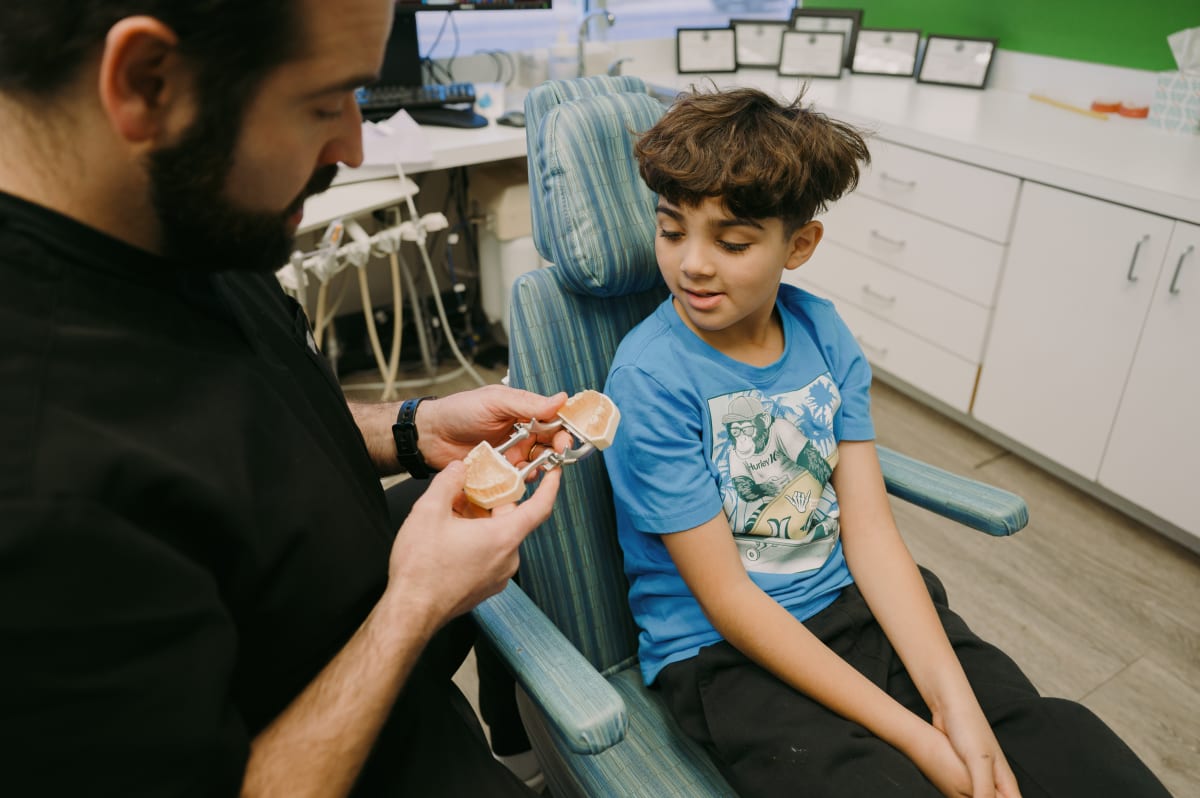
Dr. Armin and our team use a technique called tell-show-do, which means your child hears what's going to happen, sees the tool or step, and then experiences it in that order. No surprises. We also use child-friendly language throughout, so instead of saying "injection," we might say "sleepy juice for your tooth." Kids get small moments of control along the way, like choosing which flavor of polish to use or signaling when they need a break.
Moving at Your Child's Pace
Appointments move at your child's pace, not a clock's. If a child needs a few extra minutes to feel ready, they get them. We've seen too many kids who were rushed through appointments at other offices and ended up more scared than when they started.
Parents aren't asked to wait in the lobby. We view you as a partner in your child's care, and for anxious kids especially, having mom or dad nearby can make the difference between a child who cooperates and one who shuts down completely.
Nitrous Oxide: The Gentle First Step for Nervous Kids
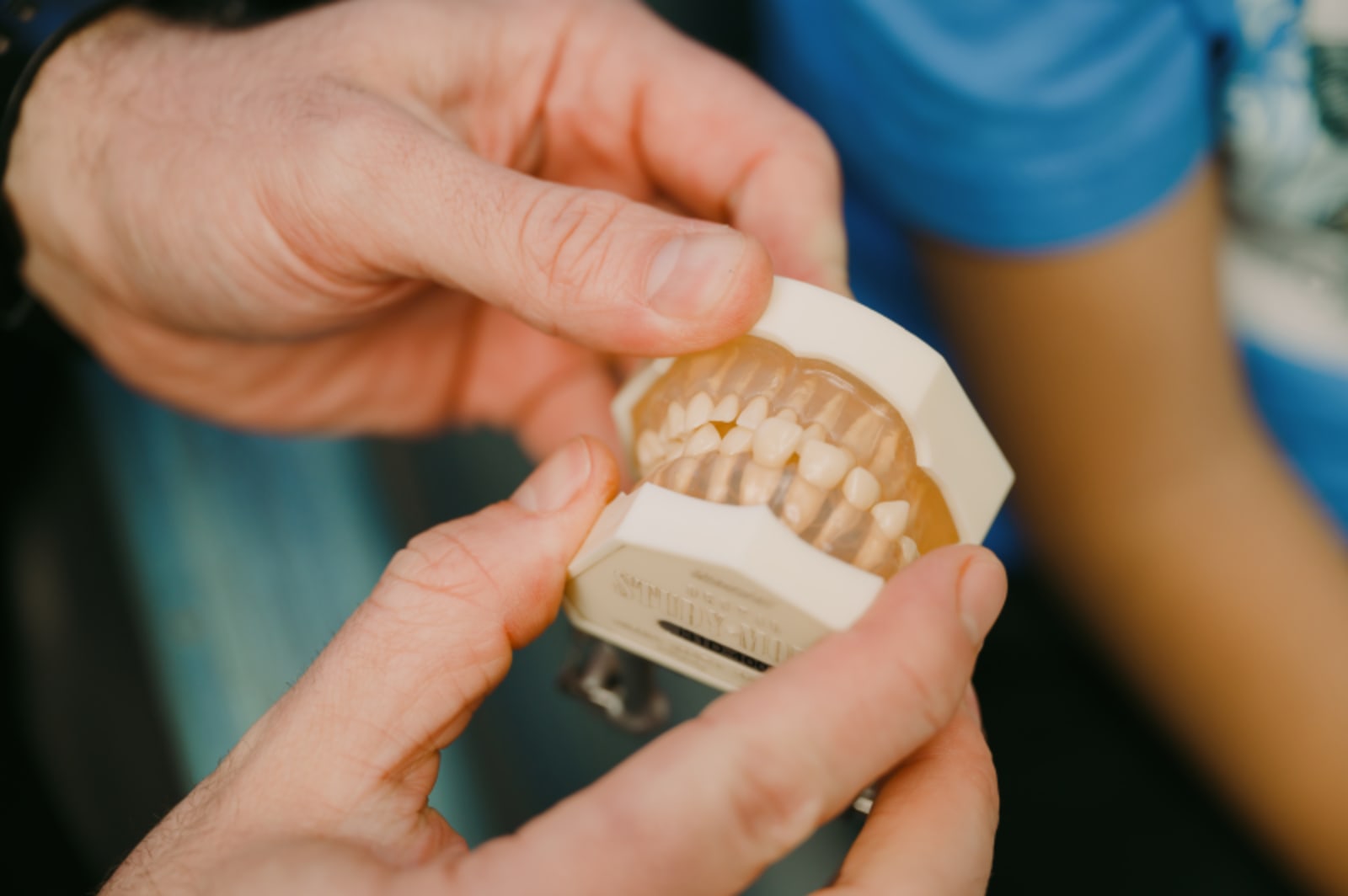
For many families in Waxahachie, nitrous oxide is where the conversation about sedation begins. If your child gets squirmy in the chair or works themselves up before appointments, we often suggest nitrous first because it's simple, well-tolerated, and takes the edge off anxiety without much more than that.
Nitrous oxide helps your child feel calm and relaxed during their appointment. They stay awake, can hear and respond to what's happening, and they're not "out." Most kids describe feeling floaty or giggly, which is why it earned the nickname laughing gas. Since it doesn't eliminate sensation, we pair it with local anesthetic when dental work is involved.
We administer it through a small, comfortable nose mask. Your child breathes normally, the gas takes effect within minutes, and when the appointment ends, we switch to plain oxygen to clear it from their system. Most kids return to normal within minutes, so they can head back to school or afternoon activities the same day.
Many parents worry that sedation means their child will be unconscious or groggy for hours. Nitrous oxide is different. It's a gentle assist for mild to moderate anxiety, perfect for children who need just a bit of extra calm during routine dental care.
While nitrous works well for many children, some need additional support. If you'd like to learn how nitrous fits into your child's first visit, we walk through what to expect. For children with deeper anxiety, stronger options are available.
When IV Sedation Makes Sense for a Child
For children whose anxiety runs deeper, IV sedation often makes the most meaningful difference.
We typically recommend IV sedation when a child:
- Has severe dental anxiety that hasn't responded to nitrous oxide or other comfort measures
- Has special healthcare needs that make cooperation during treatment difficult
- Is very young and needs extensive dental work completed safely in one visit
- Has a strong gag reflex that makes even routine cleanings uncomfortable
What IV Sedation Actually Looks Like
IV sedation produces a much deeper state of relaxation than nitrous oxide. Your child won't be fully unconscious, but they'll be deeply calm and largely unaware of what's happening around them. We use specialized pediatric monitoring equipment throughout the entire appointment, so we can respond immediately if anything changes. Afterward, there's a recovery period in our office before your child is ready to go home, and we provide detailed instructions for the rest of the day.
We know that hearing "IV sedation" can feel scary, even when you know your child needs it. This isn't a last resort. It's a thoughtful clinical decision made with your child's comfort and safety as the priority. Our team walks you through everything before the day of the appointment so there are no surprises.
If you have questions about whether IV sedation might be right for your child, the best place to start is a conversation with us.
Ready to Find a Dentist Your Child Actually Likes? Here's How We Can Help
Finding the right pediatric dentist changes everything for families dealing with dental anxiety. If you're ready to move beyond the stress and worry, Just for Kids Dental is designed around one simple goal: helping kids feel comfortable and confident about their dental care.
Choosing a dental home is a real decision. You want to know your child will be heard, that appointments will move at a pace that works for them, and that you won't feel rushed through something this important. Those are fair expectations, and they're worth asking about when you call.
We're conveniently located in Waxahachie at 1710 U.S. 287 Business, Suite #140, serving families throughout Ellis County.
When you're ready to explore your options, give us a call or reach out online, and we'll answer your questions and help you make the best decision for your child.